Customer Lifecycle Marketing for Repeat Sales
A customer buys a subscription, receives a welcome email, and then hears nothing useful until a renewal offer arrives. The company has been sending messages, but it has missed the part of the relationship that decides whether another payment makes sense to the customer. Perhaps setup stalled. Perhaps the buyer used the service once and never found a reason to return. A discount at renewal cannot answer either problem.
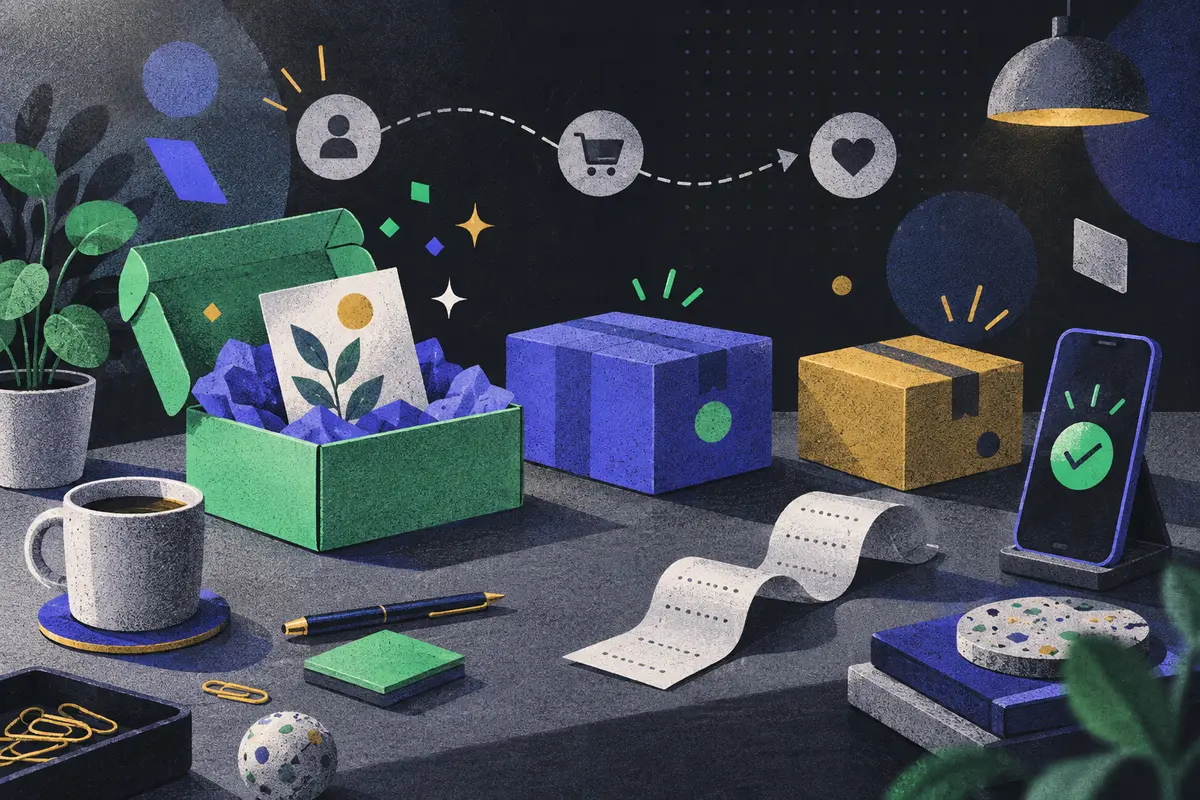
Customer lifecycle marketing is the practice of matching communication to what a person is trying to do at each point in the relationship: discover an offer, decide whether to buy, get started, continue using it, and possibly buy again or recommend it. A customer lifecycle describes those steps across consideration, purchase, use, and loyalty. The marketing decision is more specific: what help, information, or invitation is appropriate now, given what the customer has actually done?
For a business with repeat purchases or subscriptions, the most valuable shift is to treat the first sale as a change in the customer’s need, not the end of a campaign. Before purchase, a person may need reasons to trust the offer. After purchase, the person needs to make it work. Later, the person needs a credible reason to continue. Each message should serve that immediate job, and each stage should have a way to tell whether the relationship is moving forward.
The first sale changes the question
A stage diagram can help a team notice work it has neglected. The familiar sequence of reach, acquisition, conversion, retention, and loyalty is one way to describe the customer lifecycle. But the diagram is a planning aid, not a rule that every buyer follows. Someone may research for months before buying, return repeatedly without joining a loyalty program, pause a subscription, or leave and later come back. A useful lifecycle plan allows those paths instead of pushing everyone through the same timed sequence.
The practical boundary is the customer’s change in situation. A prospect who asks how a product works needs an explanation. A new customer who has paid but cannot complete setup needs help, even if a calendar says it is time for an upgrade email. A customer whose invoice failed needs a clear payment message. These are different problems, and calling all three “engagement” obscures the action required.
I would begin by defining the relationship around observable events: first inquiry, purchase, first successful use, repeat use, renewal or second purchase, lapse, and return. The exact event differs by business. A software subscription might treat a completed first project as meaningful use. A retailer might treat delivery and a subsequent order as more useful markers. Choose events that represent progress for the customer; an email open or a processed payment alone is too weak a stand-in for product value.
Then write the next useful action beside each event. After an inquiry, answer the question that blocks a decision. After purchase, make the first use easier. After a support issue, explain the resolution and what the customer can do next. Before renewal, make the current terms and available choices clear. This is lifecycle marketing at its simplest: a timely message tied to a real change in the relationship, with the service or product team able to fulfill what the message promises.
Make the promise at acquisition usable after purchase
Lifecycle marketing begins before someone becomes a customer because acquisition sets expectations. If the offer promises a quick start while the product requires extensive setup, the onboarding team inherits a problem that another sequence of cheerful emails cannot solve. The purchase page, sales conversation, and first-use guidance should describe the same outcome and the work needed to reach it.
This is why I would judge an acquisition campaign partly by what happens to the people it brings in. A campaign that produces many first purchases but few customers who complete the first useful action may be attracting the wrong need or setting an unrealistic expectation. That conclusion is a hypothesis, not a verdict from one number. Look at the actual questions buyers ask, the steps they abandon, and whether the product delivers what the acquisition message offered. The possible remedy might be a clearer promise, a simpler setup, or a different audience.
At conversion, the handoff should preserve context. If a prospect selected a plan for a particular need, the welcome message should point to that need rather than restart with a generic product tour. For a subscription, it should also state what was bought, when billing begins, and how the customer can change the arrangement. Stripe describes subscription billing as recurring charges or invoices at defined intervals; those intervals are part of the customer’s experience, not merely a finance detail. A clear first message prevents a preventable question from becoming a support case.
This approach costs more care than a single welcome sequence for everyone. The team must agree on what information is available at purchase and keep the promised next step current. The gain is relevance: the new customer receives a route to the outcome they paid for instead of a tour of every feature the company would like to promote.
Onboarding should lead to a first useful result
The first post-sale message should help a customer do something worthwhile, not simply congratulate them on buying. Stripe’s guidance on SaaS churn connects onboarding, support, customer feedback, and billing with retention work. It recommends clear steps and milestones that help a new customer understand how to get value. That does not mean an onboarding email by itself causes retention; it means the first experience is a sensible place to remove friction that could prevent continuing use.
Suppose a new software customer signs up to coordinate a project. An illustrative onboarding path would ask them to create the project, invite the teammate who will use it, and complete one real task. A long feature list would be premature. If the customer stalls before the invitation, a short message explaining that step is more useful than an upgrade pitch. If the customer finishes the task, the next message can show how to repeat the result. The trigger is the customer’s progress, not merely the number of days since signup.
The same logic applies when a purchase is not software. A buyer may need delivery information, instructions for using the product, a route to support, or a reminder to reorder when the original purchase would reasonably be used up. The timing and content should follow the product’s actual use cycle. A message that arrives before the buyer can evaluate the purchase is poorly timed even if it appears in a standard “day seven” flow.
Marketing should also know when to stop sending instructions and route a customer to a person. If a buyer reports a billing error or repeated failure during setup, another automated tutorial can make the company appear inattentive. A support response and a correction to the underlying problem come first. The later marketing message should reflect what was resolved, if the customer still needs one.
Retention messages need a reason beyond the calendar
Once a customer is active, a company has many opportunities to communicate and many ways to waste attention. The best reason to contact someone is a change that matters to their use: a feature relevant to their work, a completed support fix, a renewal decision, an appropriate plan option, or a helpful next use. Sending “we miss you” solely because an arbitrary period elapsed says little about what would bring the customer back.
The information behind the message matters as much as its wording. A subscription payment shows that the billing arrangement continued; it does not establish that the customer used the product or is satisfied. Stripe’s description of recurring revenue software covers payment, invoicing, renewals, cancellations, and failed-payment follow-up. Those records are useful, but a lifecycle team should read them alongside product use and support information when those signals exist. Otherwise a customer with a current card and no meaningful use can look healthy until cancellation.
The reverse mistake is treating every payment problem as lost interest. A failed charge may call for a payment update rather than a persuasion campaign. Subscription billing can generate invoices and payment notifications, and Stripe explains that businesses can notify customers when payment details need attention. The message should make the required action easy and describe the charge clearly. Its terms and timing need to match the business’s obligations and the customer’s arrangement.
At renewal, I would favor clarity over pressure. Show what is continuing, the price or plan that applies, and the available choices. If use has been low, offer a route to assistance or a suitable change in plan rather than claiming the customer has received value the company cannot see. If use has been strong and the customer has a clear new need, an expansion offer may fit. Paddle’s SaaS retention guidance treats onboarding and later expansion as parts of the post-sale relationship. The invitation to buy more should follow a reason to believe the original purchase worked.
Read retention by customer, revenue, and cohort
One attractive overall retention number can conceal several different stories. Customer retention asks how many people or accounts remain. Revenue retention asks how much recurring revenue remains from a defined starting group, accounting for lost or changed spending according to the chosen measure. A cohort view asks how a group acquired in the same period behaves as time passes. Paddle recommends looking at customer, recurring-revenue, and signup-cohort views because each reveals a different part of the relationship.
Here is an illustrative calculation, not a business benchmark. If 100 paying accounts start a month and five of those same accounts leave during it, customer churn for that starting group is 5% for the month. If those five accounts each paid far more than the average account, the revenue lost can be much larger than 5% of starting revenue. If other accounts upgrade, the net revenue movement can look better even while people leave. The measures answer different questions, so name the denominator and time window each time. Stripe’s churn example likewise defines departures from a starting customer population over a specific period.
Now separate customers by when they first purchased. If one signup month loses many accounts shortly after purchase while older cohorts remain, the first-use experience deserves attention. If losses cluster around a renewal point, examine the product’s continuing value, the terms presented, and any service problems customers raise before that point. A cohort pattern can tell you when to look; it cannot tell you why people left without their behavior or feedback. Paddle describes cohort analysis as a way to see when customers are at higher risk of churn, which can guide that next inquiry.
This measurement is useful only when it changes a decision. If customers are still active but spending less, test whether the plan fits their actual needs before offering a discount. If a group never reaches the first useful result, improve setup or acquisition expectations. If a cohort leaves after repeated unresolved support problems, marketing should help surface those problems to the team that can fix them. A polished retention campaign cannot compensate for a service that remains difficult to use.
Build a small program around decisions you can act on
The first version of a lifecycle program does not need a message for every imagined stage. It needs a few situations the team can recognize and serve well. I would start with new buyers who have not reached a first useful result, active customers approaching a real purchase or renewal decision, and customers whose payment or support issue needs follow-up. These groups are distinct enough to warrant different messages and concrete enough for a team to check whether the response helped.
For each situation, define the event that starts it, the customer need it implies, the next action the company can honestly offer, and the event that ends it. A successful onboarding step should end an onboarding reminder. A resolved payment issue should end a payment reminder. A cancellation should stop renewal promotion and, where appropriate, open a separate opportunity to learn why the customer left. Without an ending event, even a relevant sequence eventually becomes noise.
Keep the content close to the decision. An onboarding email needs a clear next step and a place to get help. A renewal message needs accurate terms and choices. A request for feedback should come when the customer has enough experience to answer and when the company can respond to what it hears. Stripe’s churn guidance explicitly links feedback with acting on recurring problems and communicating the response. Asking for feedback without any route to change is a poor use of the customer’s time.
Finally, compare the people who received a message with the outcome that message was meant to help. Did more new customers complete their first useful action? Did customers with failed payments update their details? Did the next purchase or renewal occur, and did complaints about surprise charges fall? These questions are more informative than a high open rate alone. If the intended action does not improve, revisit the trigger, the offer, and the product experience before writing a louder subject line.
The central judgment is simple: lifecycle marketing earns another sale by helping a customer succeed with the current one. Acquisition, onboarding, service, billing, and renewal are connected moments in one relationship. Map those moments using actual customer events, answer the need present at each one, and judge the work by whether customers can keep getting value. Repeat sales follow more credibly from that than from a sequence of messages that merely knows how long someone has been on a list.